The Humble Oyster: Unsung Hero of the Estuary Pt. 1
The Humble Oyster: Unsung Hero of the Estuary
By Capt. Weatherly
This month we’re diving into one of the unsung heroes of the estuary — the Eastern Oyster (Crassostrea virginica).
Critical habitat? Check
Erosion control? Check
Filtration system? Top notch.
Hungry? Bring them on.
Keystone of the Marsh
Oysters are a keystone species, meaning they play a disproportionately large role in the ecosystem. When oyster populations decline, the ripple effect can alter the entire estuary. From filtering water to providing habitat and stabilizing shorelines, these bivalves quietly hold the ecosystem together.
Nature’s Filters
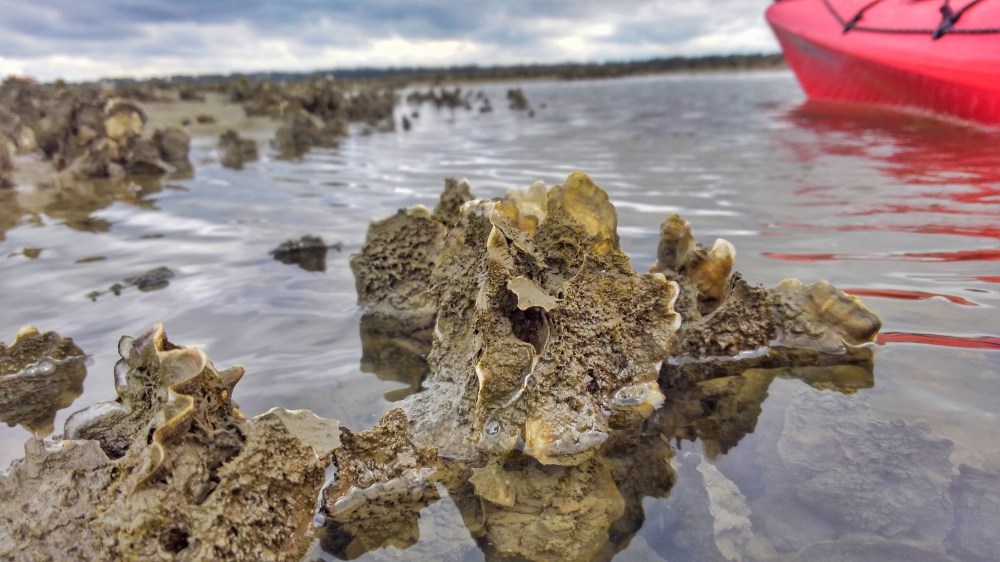
Oysters are bivalves — two halves of a shell joined by a muscular hinge — found on the mud throughout the intertidal and shallow subtidal zones. They’re filter feeders, drawing in water and straining out tiny bits of plankton and organic material.
As they filter food from the water column, they also remove whatever else is present — including pollutants washed in from nearby roads. One adult oyster can filter up to 50 gallons of water per day (though ours are submerged for only about half that time).
They also take in naturally occurring bacteria and plankton. While these are usually harmless in the environment, they can make us sick if concentrated in an oyster harvested from the wrong place — which is why SCDNR carefully monitors water quality in local oyster beds.
Why We Harvest in “R” Months
One of the reasons our water looks so dark in summer is the abundance of plankton. As temperatures drop in winter, plankton levels fall too. In January and February, you might notice that the water in our creeks is suddenly clear enough to see several feet down — a far cry from the inch or two of visibility in July!
That’s part of why oyster season runs during the “months that end in R.” Cooler water means fewer bacteria, and it also gives oysters a break from harvest during their summer spawning season. (Plus, eggs make an already strange-looking food a little stranger!)
The Oyster Life Cycle
Oysters are broadcast spawners, releasing clouds of eggs and sperm into the water and hoping for the best. Their larvae, called spat, float until they find something solid to attach to — ideally another oyster, though they aren’t picky. They’ll settle on rocks, docks, and even old bottles if they stay still long enough.
Wild oyster clusters often resemble piles of rocks, but look closer and you’ll see the structure of a living reef. The largest oyster in a cluster is female, and the rest are male — until she dies. Then the biggest male transforms into a female. (Oh my!)
Growth and Management
It takes several years for oysters to reach harvest size. The South Carolina Department of Natural Resources (SCDNR) monitors oyster beds to ensure good water quality and sustainable harvests. Their website provides up-to-date information about which areas are open or closed to harvest.
Overharvesting is a global problem. Historical accounts from the 1700s describe six-inch oysters in the Chesapeake Bay. Scientists estimate today’s population there is just 1% of its historic size. Thanks to careful management and restoration efforts, the Bay’s oysters are making a comeback — a reminder of what’s possible with stewardship.
Reuse, Rebuild, Restore
Locally, oyster shells can be dropped off at a recycling station, where they’re cleaned and reused as habitat for baby oysters to settle on. SCDNR’s SCORE program uses these recycled shells to build new reefs — sometimes bagged like bricks and stacked along mudflats.
Several of these restored sites sit just off Folly Beach, where empty shells were barged in and sprayed across the flats. Today, thriving oyster beds cover the area — a testament to community conservation in action.
A Razor-Edged Hero
Oysters may not look like much — and yes, their edges can be brutal — but they’re an integral part of our salt marsh ecosystem. They filter our waters, stabilize our shorelines, create habitat, and support a vibrant local economy.
We didn’t even get to the habitat creation, erosion control, or their role in South Carolina’s seafood industry — but we’ll save that for Part 2.
For now, next time you see an oyster bed or enjoy one at a local roast, take a moment to thank this humble bivalve for all the quiet work it does.
Want to learn more about oysters and estuary life? Join us on a Saltmarsh Adventure Tour!