About the Blue Crab
Blue Crabs
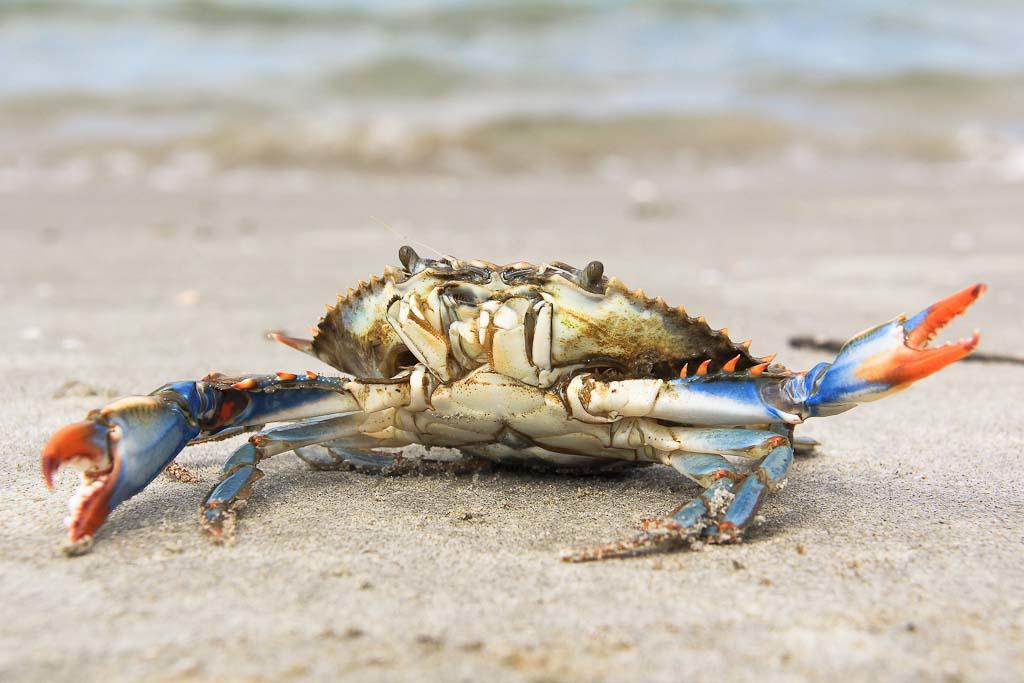
Few animals feel more closely tied to Lowcountry waters than the blue crab (Callinectes sapidus). The name literally means “beautiful savory swimmer,” which feels like a pretty accurate description. Equipped with 3 walking legs, a claw, and a rear swimmerette on each side, these crabs glide sideways through the water. Blue crabs are both an important part of the estuarine ecosystem and a favorite seafood across the Southeast.
Like many estuarine species, blue crabs spend parts of their lives in different environments. Understanding that life cycle and the pressures they face across a wide area helps explain why scientists monitor them so closely – and why management of the fishery is so important.
 From Eggs to Larvae
A female blue crab carries her eggs in a bright orange mass (sponge) beneath her abdomen. A single female can carry hundreds of thousands to several million eggs at one time. What a difference from the shark we discussed last time!
Larvae are released into higher salinity waters near the mouth of the estuary. The tiny larvae, called zoea, go through several plantonic stages while drifting offshore. After several weeks they transform into megalopa, which finally starts to resemble a small crab. They ride tides and currents back into estuaries like Charleston Harbor and the surrounding creeks.
Growing Up in the Estuary
Juvenile crabs settle into shallow marsh creeks. These areas act as nursery habitat, providing shelter from predators and plenty of food.
Crabs have a hard exoskeleton and grow by molting, (softshell sandwich anyone?) shedding their hard outer shell and expanding before the new shell hardens. They may molt dozens of times throughout their lives. During this brief period they are soft and vulnerable to predation.
Role in the Estuary
Blue crabs play several important roles in Lowcountry ecosystems.
They are both predator and scavenger, feeding on clams, small fish, worms, detritus, and even other crabs. Ever wondered if a crab can eat a shark? It sure can, it just has to wait for the shark to die! This helps recycle nutrients and keeps estuarine food webs moving.
Blue crabs are also an important food source for larger animals. Red drum, dolphins, birds, and even other crabs all prey on them.
Because they interact with so many species, blue crabs are often considered an important link in the estuarine food web.
 How People Catch Them
Blue crabbing is one of the most accessible fisheries along the coast.
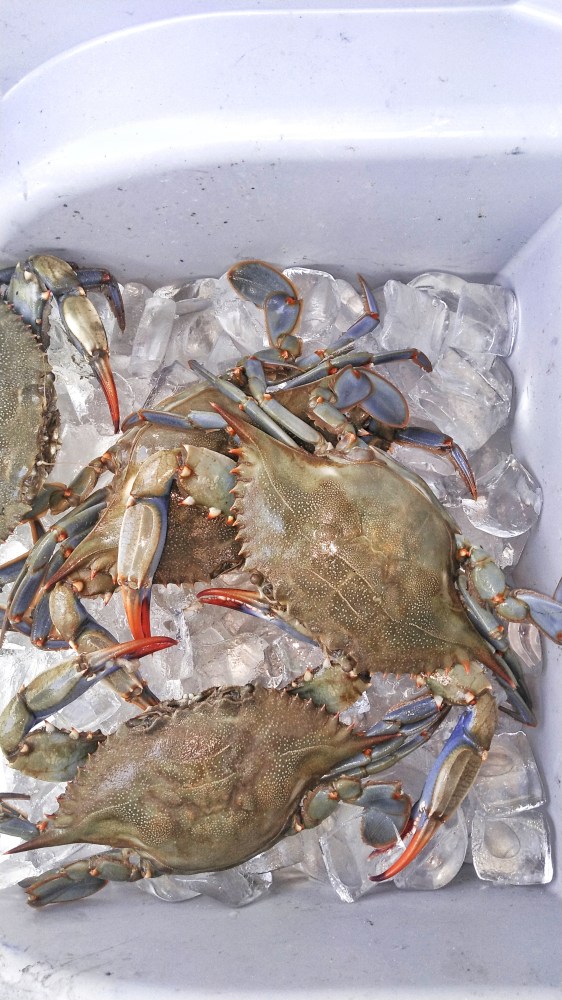
Commercial harvesters typically use wire crab pots baited with fish or other attractants. These traps sit on the bottom and allow crabs to enter easily but make it harder for them to escape.
*Bycatch note: Traps must include a TED, or Turtle Excluder Device. These small round openings encourage curious Diamondback Terrapins to poke their head in but don’t allow them to fit into the trap. Similar devices are used in shrimp nets to prevent sea turtles from being entangled in the nets.
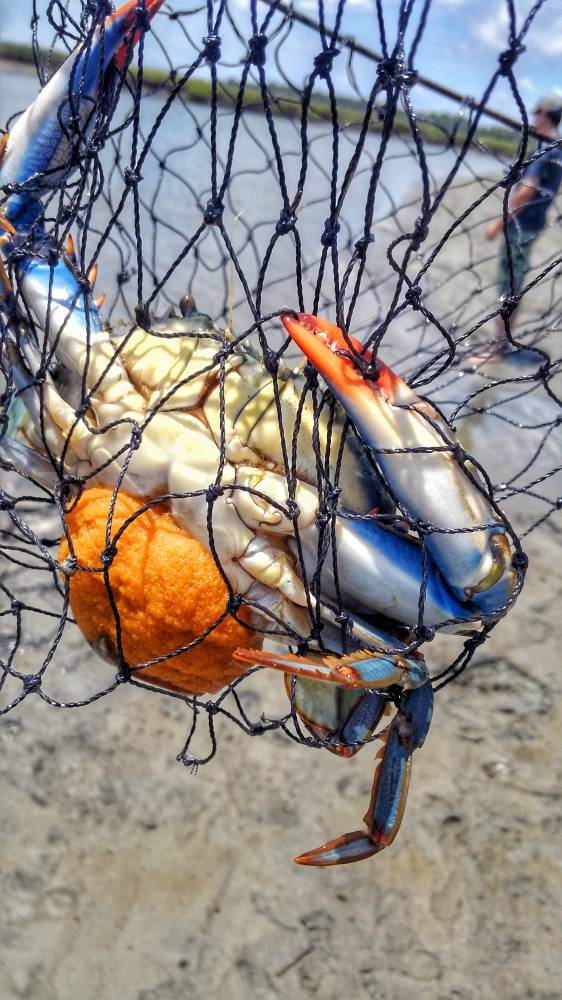
Recreational crabbers often use simpler methods like hand lines, dip nets, or small traps dropped from docks and creek banks. Spend enough time around a dock in the Lowcountry and you’ll likely see someone slowly pulling up a hand line with a crab clinging stubbornly to a piece of bait!
The Blue Crab Fishery
Blue crabs support an important commercial fishery throughout the southeastern United States. In South Carolina, the fishery is managed by the South Carolina Department of Natural Resources (SCDNR).
Scientists monitor blue crab populations through surveys and catch data to ensure harvest levels remain sustainable. Regulations include trap limits, seasonal rules, and protections for egg-bearing females to help maintain healthy populations.
Like many fisheries, blue crab numbers can fluctuate due to weather, habitat conditions, and fishing pressure. Careful monitoring helps managers respond when populations decline and maintain the resource for the future.
Blue crabs are such a common sight in our creeks that it’s easy to overlook how remarkable they really are. From drifting larvae in offshore currents to scavenging predators in the marsh, they move through multiple habitats and play an important role in the estuary along the way.
They’re also a reminder that sustainable fisheries depend on understanding the full life cycle of a species—from the tiny larvae drifting in the ocean to the crab that ends up on someone’s dinner plate.