What is an Estuary?
By Capt. Weatherly
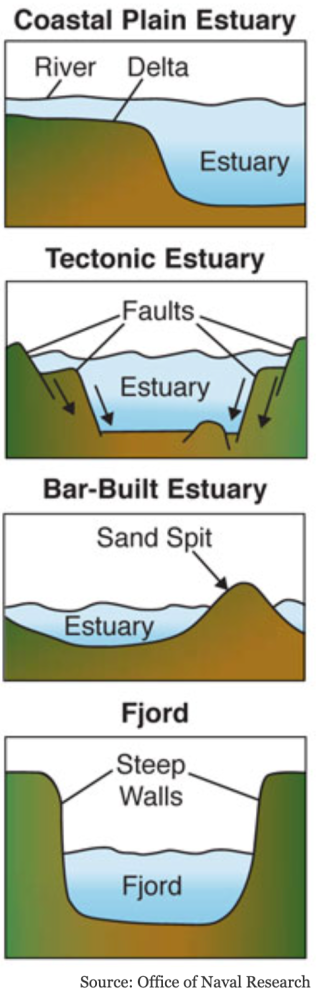 What is an estuary? This is one of my favorite questions to hear on the boat, and what started me down the path of ecotourism in the Charleston area. At its most basic, an estuary is an area where freshwater rivers meet the ocean, resulting in fresh/salt water mixing. There are four main types of geologic estuaries: coastal plain (or drowned river mouths), fjords (deep valleys carved by glaciers), tectonic (fault lines causing land to sink), and bar-built estuaries (us!).
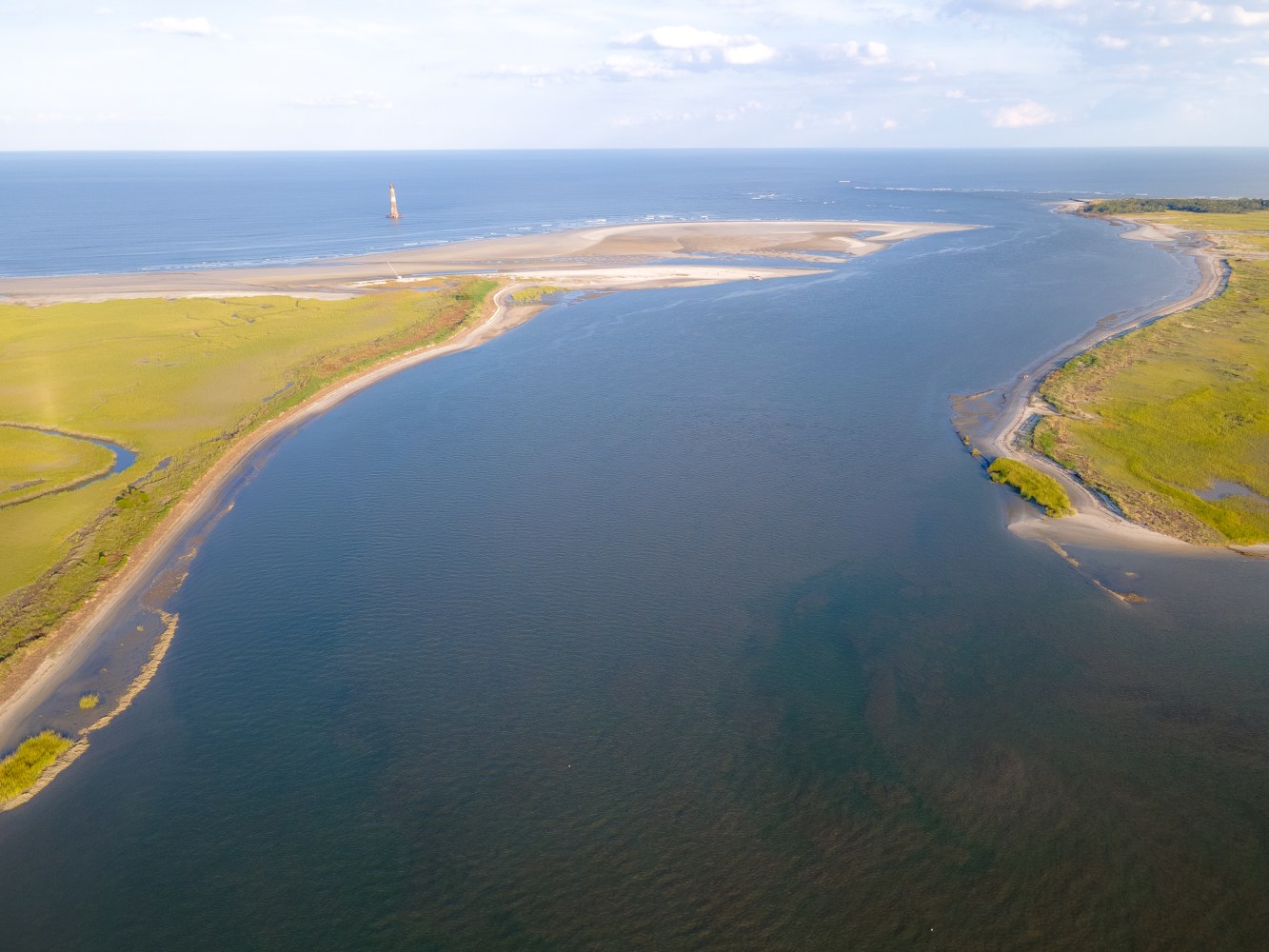
Bar built estuaries occur when barrier islands form parallel to the mainland, creating an estuary in the middle. Charleston Harbor itself could be considered a more classic drowned river mouth that filled as sea level rose and flooded the coastal plain.
Estuaries are dynamic – constantly changing. The tides here change the direction of water flow four times a day and create a landscape that can look completely different every hour. Folly Beach doesn’t receive direct freshwater river input, although it is influenced by the the Ashley, Cooper, and Wando Rivers that empty into the Charleston Harbor.
Estuaries have geologic function, but the way they support marine life makes them shine! We’ve talked about the Spartina grass in previous months, but I would be remiss to not mention the basis of the estuarine food web. The nutrients released from the previous year’s decaying grass provides energy, directly and indirectly, all the way to the top of the food chain! As the water levels drop oysters begin to appear along the rivers edge. Oysters are habitat, food, and filtration services. Below the oysters? My personal favorite, pluff mud. This nutrient rich mud is on the bottom of our waterways and gives off the wonderful “marshy” smell you either love or crinkle your nose to. (No judgement either way.)
These building blocks help the salt marsh to be a wonderful nursery ground for a multitude of species. Many of our offshore fish and shark species spend a part of their lifecycle in our creeks before making their way offshore. Consider red drum. Adults spawn in the inlets and larvae/juveniles can be found far inland in extremely low salinity waters. As they grow they make their way into larger creeks before moving into offshore coastal water around ages 3-5. Many species are able to make use of the extended reach of the creeks in the younger years!
Estuaries may look quiet on the surface (one of things we love!), but they are some of the most productive ecosystems in the world. When you step back and look at it, an estuary isn’t just a place where fresh and saltwater meet. It’s a system that supports life at every stage – from microscopic plankton to the fish we catch offshore.
So the next time someone asks, “What is an estuary?” my answer is simple: it’s where things begin.