Tidepools
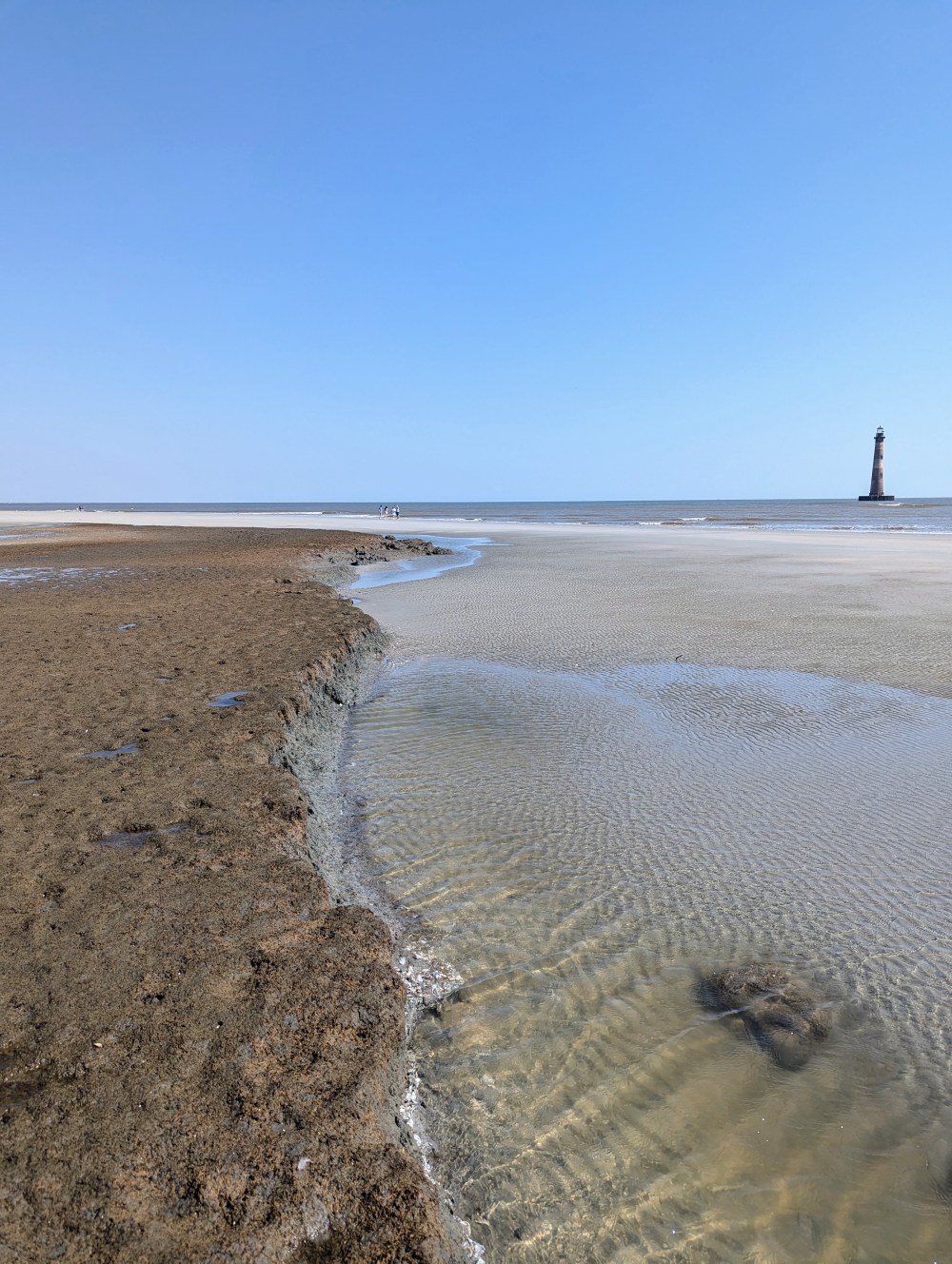
There’s any number of activities to do on the beach, but one of my all time favorites is tidepooling. As the tide recedes, water runs across the beach and forms gullies, valleys, sandbars, and deep holes near rocks or jetties. Catch it on the right day and critters and treasures abound in these small, briefly lived tidepools!
Not all tidepools look like the rocky pools you see in nature documentaries. Along our beaches, even a shallow gully can become a temporary home for surprising creatures. A gully is a lower point on the beach that holds water and funnels
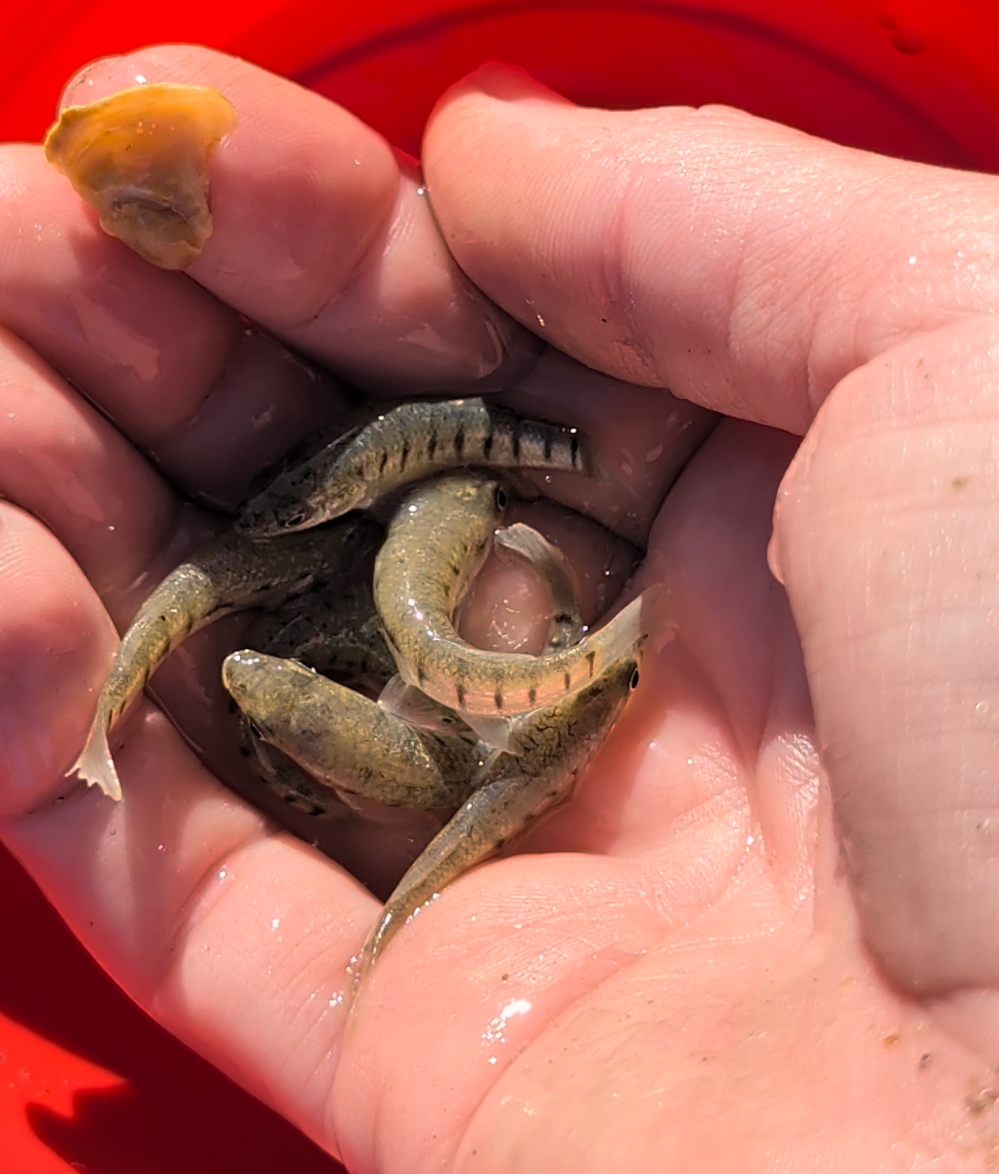
it along the beach to meet the ocean. Small minnows are often trapped there and it’s “easy” to catch them before they slip into the water. A small dipnet is the preferred method of fishing, but not to worry if you don’t have one handy – using your feet to push fish out of the water is a highly underrated skill! These are usually mummichogs or other juvenile fish. They are hardy little guys, but do keep in mind being removed from your habitat by an alien is unpleasant and they appreciate being quickly put in a bucket or being immediately released.
*Pro tip: If your shadow goes over a school of fish it will spook them, watch the sun angle.
Deeper tidepools, sometimes a foot or two deep, can be found at the end of rock jetties. Occasionally larger animals like sea stars, sanddollars, and crabs can be found there. Hermit crabs are also easy to spot in the shallow water and it’s fun to watch them scurry along. If you’re lucky, you may even get to watch them trade shells!
*Pro tip: Get a few folks to each choose a hermit crab. Draw a circle in the sand and put the crabs in the middle. First crab to cross the line wins. Be patient, it’s a slow race 🙂
Don’t forget to take a look at the rocks themselves! Many marine invertebrates live on a hard surface. Barnacles are usually found highest up on the rocks and the community transitions to oysters towards the bottom. Algae and seaweed may also be hanging around! Rocks are a loo
k but don’t touch kind of tidepooling. Barnacles and oysters seem to be looking for a reason to cut an unsuspecting foot and come with a side of bacteria. If you do get a cut, be sure to wash it out well!
Tidepools are also a great place for small children to play. No waves to knock them over and no worrying about the current.
*Pro tip: Checking for crabs before plopping down in a tidepool is always a good idea.
Next time you’re out walking the beach at a lower tide, take a few minutes to stop at a gully or tidepool. You never know what may be waiting just under the surface.