Sharks teeth: from skeptic to collector
By Capt. Weatherly
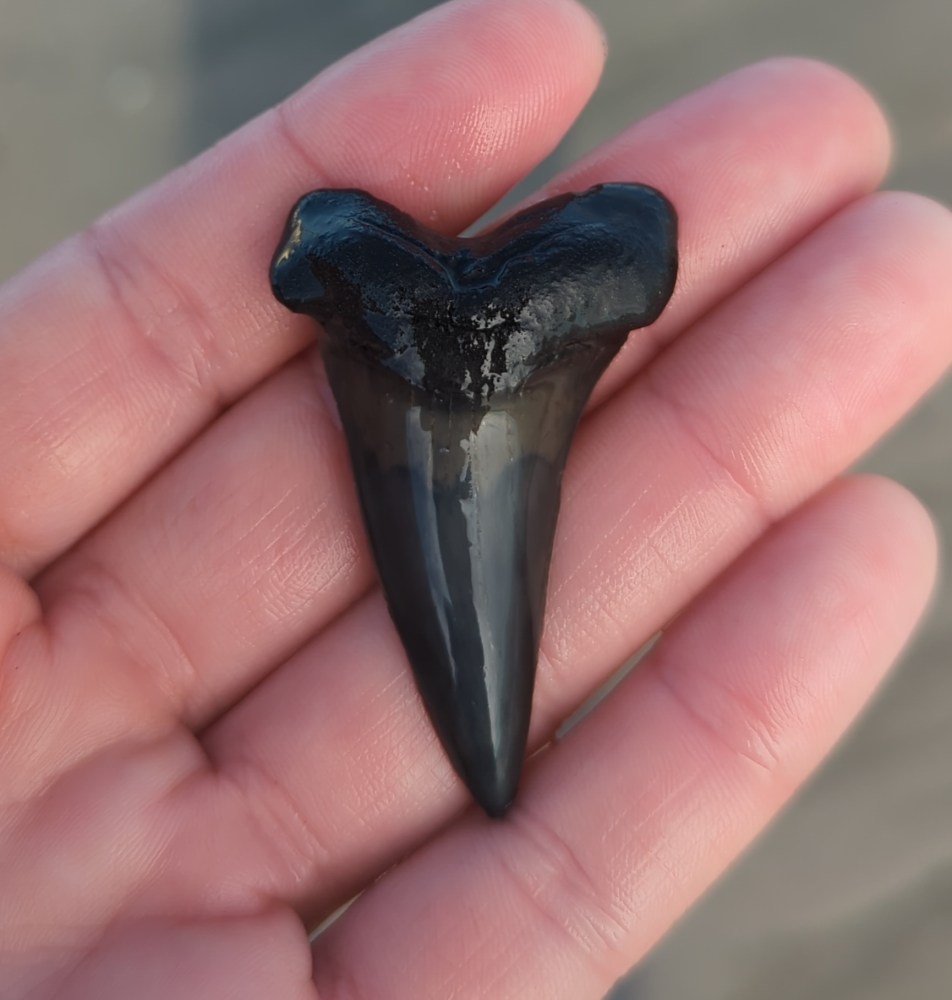 Shark teeth are arguably one of the most sought after treasures on the beach. Growing up my Grandmama had a coke bottle on the living room shelf that was filled to the top and overflowing. She added a few on even the quickest beach walk. As a child, it felt like magic.
Sometimes I went with her and stared at the little piles of shells – but I wasn’t graced with the same magic. Or, more likely, the attention span. I didn’t have the shark tooth bug and never quite “got” the obsession. The search was boring, the reward small, and if I really wanted one an adult would hand it to me anyway.
You’re probably thinking: wait… don’t you lead shark tooth tours?! Yep. I could find & ID them, but that’s different than it being a PURPOSE.
That changed in December 2024. On the Winter Solstice I kayaked to Crab Bank to watch the sunrise in the harbor (why is that more appealing/easier than a beach walk for teeth?!) and came home with pockets stuffed full of teeth. The tooth bug finally caught up to me, a few decades later. It takes time to develop a sharper eye and understand where different size teeth would be at different times. It’s still a work in progress! Here are a few things I’ve learned.
How to Find Shark Teeth
🦈 Look for the shine.
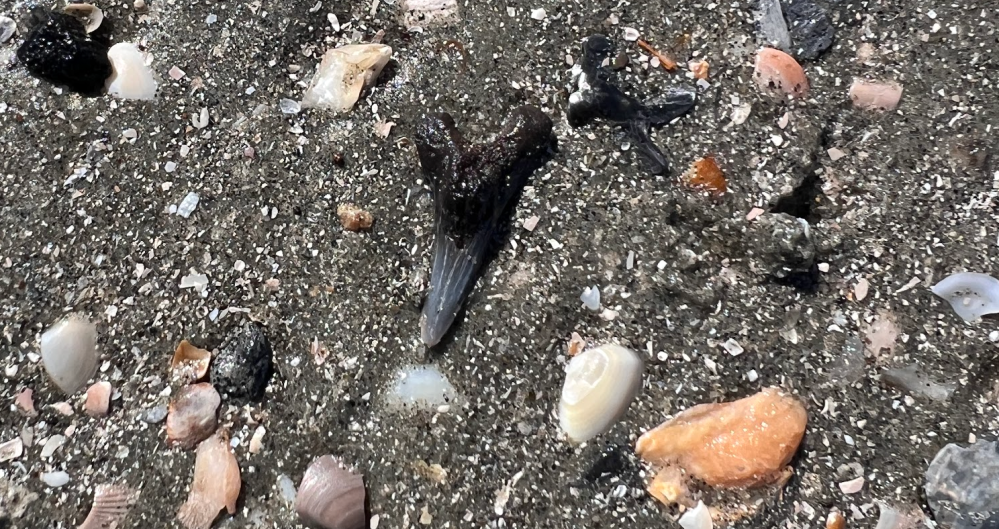
Teeth reflect light differently than shells. They have a luster to them, a depth to the sparkle that falls flat on a black shell. The easiest way to spot this is when they are wet, esp when walking away from the sun.
🦈 Match the shell size.
As the tide goes out shells settle out on the beach according to size/weight. Shark teeth are no different. Look around and the size of the shells to get an idea of the tooth size. Bigger teeth are often sitting all alone on the beach, just waiting to be picked up. Smaller teeth are often found in the shell line and patches of small, crushed up shells.
*Note: This is nature we’re talking about and nothing is a hard rule.
🦈 Time the Tide.
The second half of the outgoing tide is often the sweet spot. Shell lines will start to form and teeth will have that wet sheen.
🦈 Don’t rely on perfect shape.
Shape isn’t everything, especially when finding bigger teeth. Sometimes they’re half buried in the sand and only a corner of the root is sticking up. Contrary to the shine we just talked about, the root is more dull. There’s no trick to this one – it’s just logging hours of searching.
🦈 Be patient.
Just because someone walked in front of you doesn’t mean there are no teeth! No one (except maybe Chuck) finds everything.
Where to go
Now that we have a few tricks for the hunt, you’re probably wanting to know where to go.
🦈 Folly Beach is a great spot for finding teeth. Start at the pier and walk either direction, or head to the County Park on the West end.
🦈 Morris Island is our favorite spot. It’s typically at least a mile walk to the “better” hunting grounds, but we occasionally find smaller teeth closer to the inlet.
🦈 There are other areas around town with teeth, but we’re focusing on Folly today since it’s our home base (please note fossil collection is now prohibited on Crab Bank)
It’s never too late to start a new hobby. I’m now a fully converted shark tooth enthusiast when multiple overflowing bottles of my own.
If you find something and aren’t sure what it is, send us a photo – we’re always happy to help with ID!
And if you want some hands-on practice, we’d love to have you join us on the boat to share the fun!
Click here to learn why the Charleston area is such a fossil hotspot!