Birding Bucket List: Fall Migration in Charleston
By Captain Olivia
South Carolina: A Birding Paradise
Ready to become a bird nerd? (Yes, that’s a verb). If you’ll be on the SC coast in the coming months, then now is a perfect time to take the leap.
South Carolina’s diverse and accessible habitats make it one of the best places in the world for birders. There are great birding opportunities all year long, but fall is particularly special, when the South Carolina coast becomes a hotspot for shorebird migrations. Just as the daily high temperatures become more pleasant, thousands of birds embark on epic journeys from their northern nesting areas to more southerly wintering grounds, stopping along our coast to rest and refuel along the way. In addition to the migrators, you can expect to see some summer holdovers and early winter arrivals – making it easy to check a large number of species off your list in just one trip.
Why Charleston?
The coastal ecosystems of the Charleston area provide essential resources for migratory shorebirds. Mudflats, oyster bars, and undeveloped beaches offer abundant food and safe resting spots for birds to refuel and regain energy. Without these habitats, many migratory birds would struggle to complete their arduous journeys.
Charleston’s coast also offers maritime forest, expansive salt marshes, and designated bird sanctuaries – encouraging the presence of birds of prey, seabirds, songbirds, and wading birds.
Some Standout Spring Migrants
These are just a few of our favorite shorebirds that migrate through SC:
-
- Red Knot: This humble shorebird undertakes one of the longest migrations of any animal in the world, traveling over 9,000 miles each spring and fall between their wintering grounds at the southernmost tip of South America to their breeding grounds in the Arctic.
- Whimbrel: Whimbrels are fun to spot due to their distinctive long, curved bills, which they use to slurp up invertebrates buried deep in the pluff mud flats. The single largest known nighttime roost for migrating Whimbrels is along our coast, not far from Charleston.
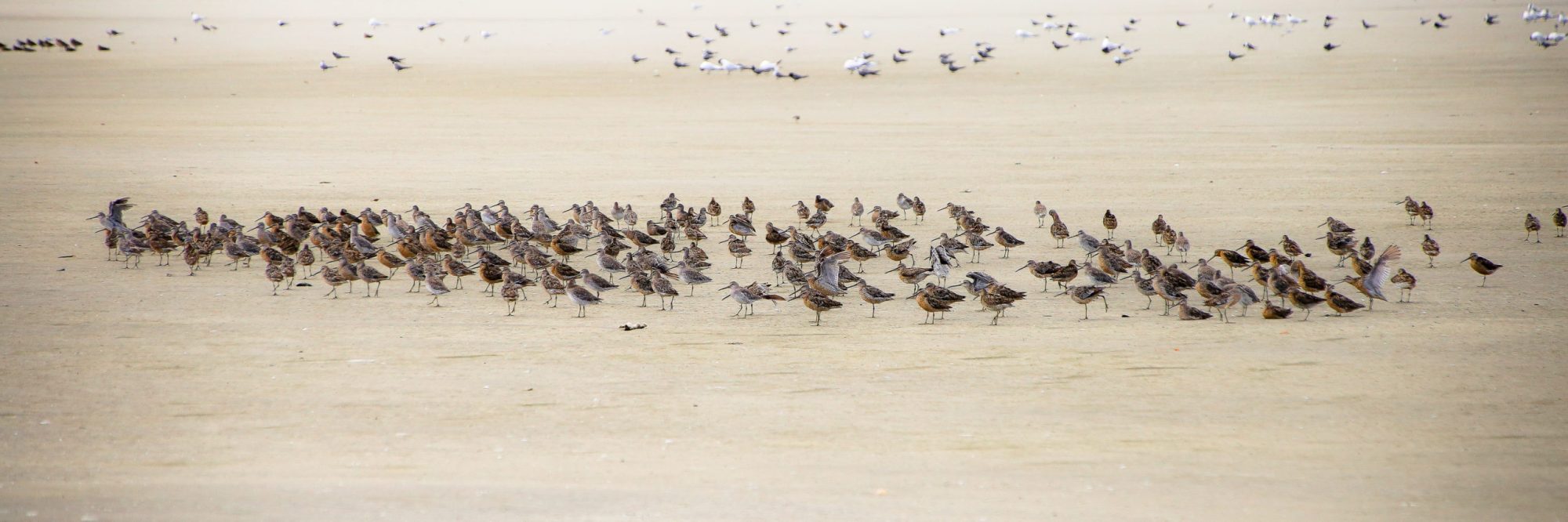
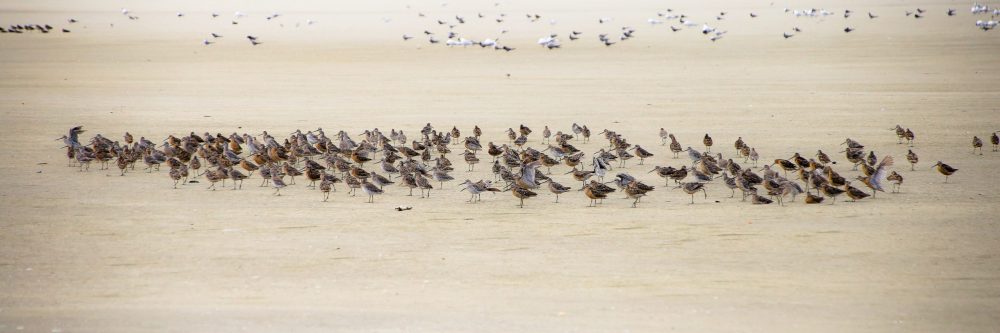
- Dunlin: Dunlin are often found in large flocks in our salt marsh estuaries during migration. Watching these large groups forage in the pluff mud and fly in synchrony is a classic part of the fall birding experience near Folly Beach.
Some Other Fall Species
Fall is known as shorebird migration season, but that’s not all you may see. Early in the season, you can still spot some summer residents who haven’t set out on their own migration quite yet, and you never know when the first early winter birds will arrive!
Seabirds
- Black Skimmer: With one of the most uniquely adapted bills of all birds, watching these birds elegantly skim the surface of the water hunting for fish is stunning. You have to see it for yourself.
- White Pelicans: The second largest bird in North America is hard to miss if you’re lucky enough to get a fly by. With a 9 foot wingspan, a bright white body, huge orange bill, and contrasting black wingtips, they are striking. Beginners may be tempted to misidentify these birds as wood storks from further away, so look closely for the iconic pelican pouch and crooked neck (as opposed to the wood stork’s long, outstretched neck in flight).
Raptors
-
- Osprey: These fierce fish-hunters are most common in warmer weather, but it’s possible to spot them soaring over waterways and dramatically diving for fish any time of year.
- Peregrine Falcon: The fastest animal in the world is a winter resident along our coasts. The mixture of expansive salt marshes butting up against dense maritime forest creates the perfect habitat for this bird-hunter to hide, rest, and hunt.
- Bald eagles: Bald eagles are becoming more common throughout the US, which is great news for birders as it never gets old watching one of these majestic birds soar overhead or perform dramatic courtship rituals over the water. They nest along our coast in the winter, but sightings usually pick up as soon as the peak summer heat subsides.
Shorebirds
- American Oystercatcher: As the name suggests, you’ll find these striking birds hanging out on oyster bars all year-long, but as we move toward winter their numbers increase dramatically. Look for an orange beak shaped exactly like an oyster knife!
Experience Fall Migration
The best way to immerse yourself in the magic of fall migration is by getting out on the water. Tideline Tours offers guided boat tours that take you to the heart of South Carolina’s vibrant coastline. In one short boat ride departing from Folly Beach, you can see all of the best birding habitats, including a visit to Bird Key Stono, a protected seabird sanctuary. Whether you’re a veteran birder or a novice nature lover, join us to experience the magic of spring on the water.
Visit the tour page for more info and booking!